The Green Kitchen Trend Evolves in 2026 with Stained Cabinetry Finishes
We may earn revenue from the products available on this page and participate in affiliate programs.
PublishedJan 23, 2026 1:45 AM EST
Sign Up for Domino’s Newsletter
Sign Up for Domino’s Newsletter
By signing up, you confirm you are 16+, will receive newsletters and promotional content and agree to ourTerms of Useand acknowledge the data practices in ourPrivacy Policy. You may unsubscribe at any time.
Based purely on the numbers, the most popular kitchen cabinet colors are white and wood. Yet looking around, it appears green has been dominating renovations. Sage, pea, forest, lime—every shade has appeared in the past five years. Even celebrities such as Aaron Paul and leading designers like Jeremiah Brent favor green kitchen cabinets. And when experts were polled on the topic recently, they indicated a desire to see even more green tones.
It is safe to say green kitchens are not going anywhere in 2026. The difference now is that designers are not always reaching for a can of paint. Instead, they are selecting stains that allow the movement of the wood grain to show through. Here are five spaces that demonstrate the trend is evolving.
Invest in Pre-Stained Premium Veneer
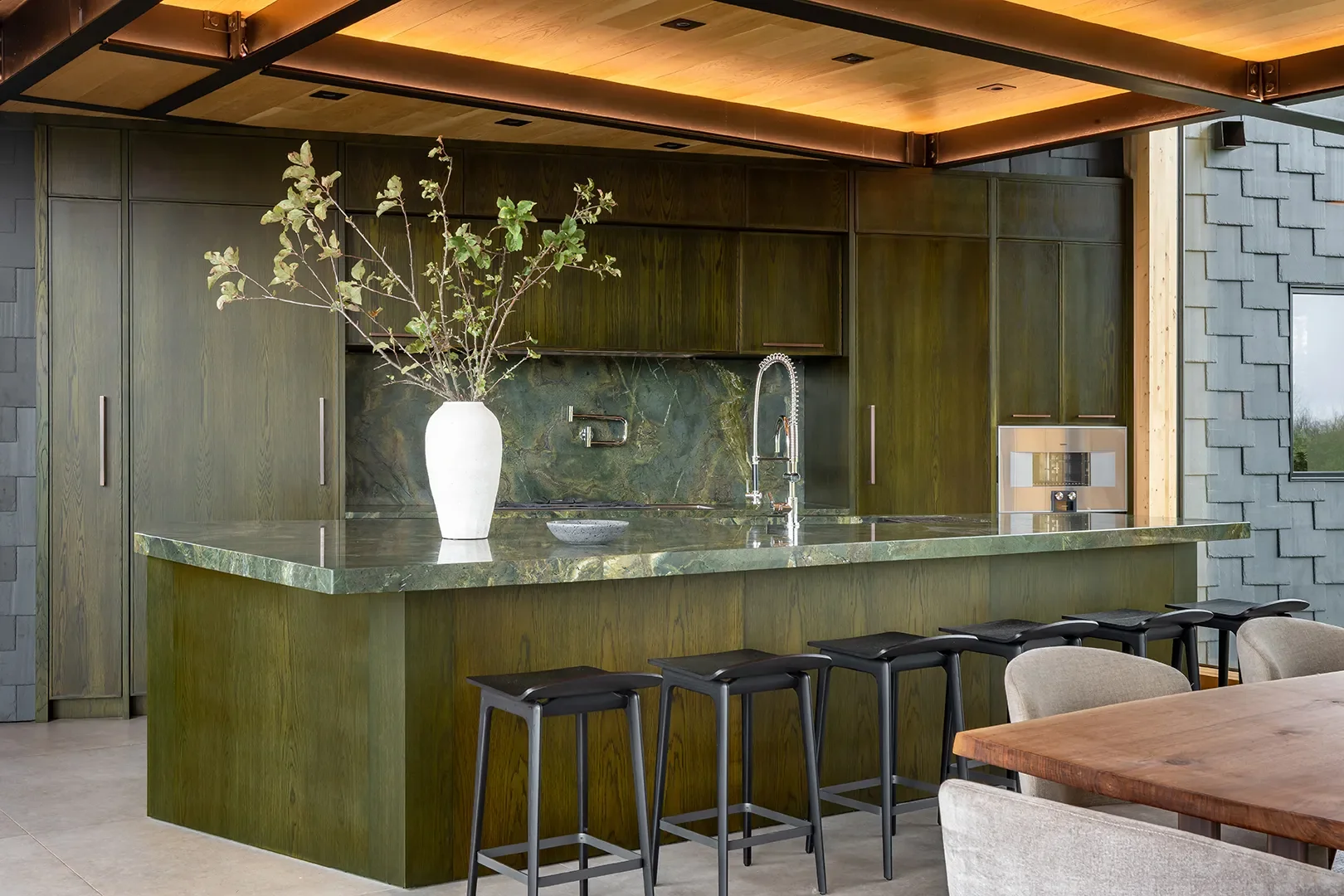
Karin Bohn of House of Bohn is among the professionals who selected a semi-transparent green finish for a client’s white oak cabinets. The results are striking, but achieving a uniform appearance is challenging, so consider investing in a product that delivers an even finish. “More costly, premium wood veneers, such as the Italian line Tabu, offer a refined solution by delivering a more consistent finish and controlled color tone,” shares Bohn.
While white and stainless steel counters have been a popular pairing with stained green cabinets, Bohn committed fully to bold green marble. Verde Guatemala and Breccia D’Eggitto would be the recommended selections for a monochromatic space of this kind.
Achieve an Earthy Finish with Oil Wax
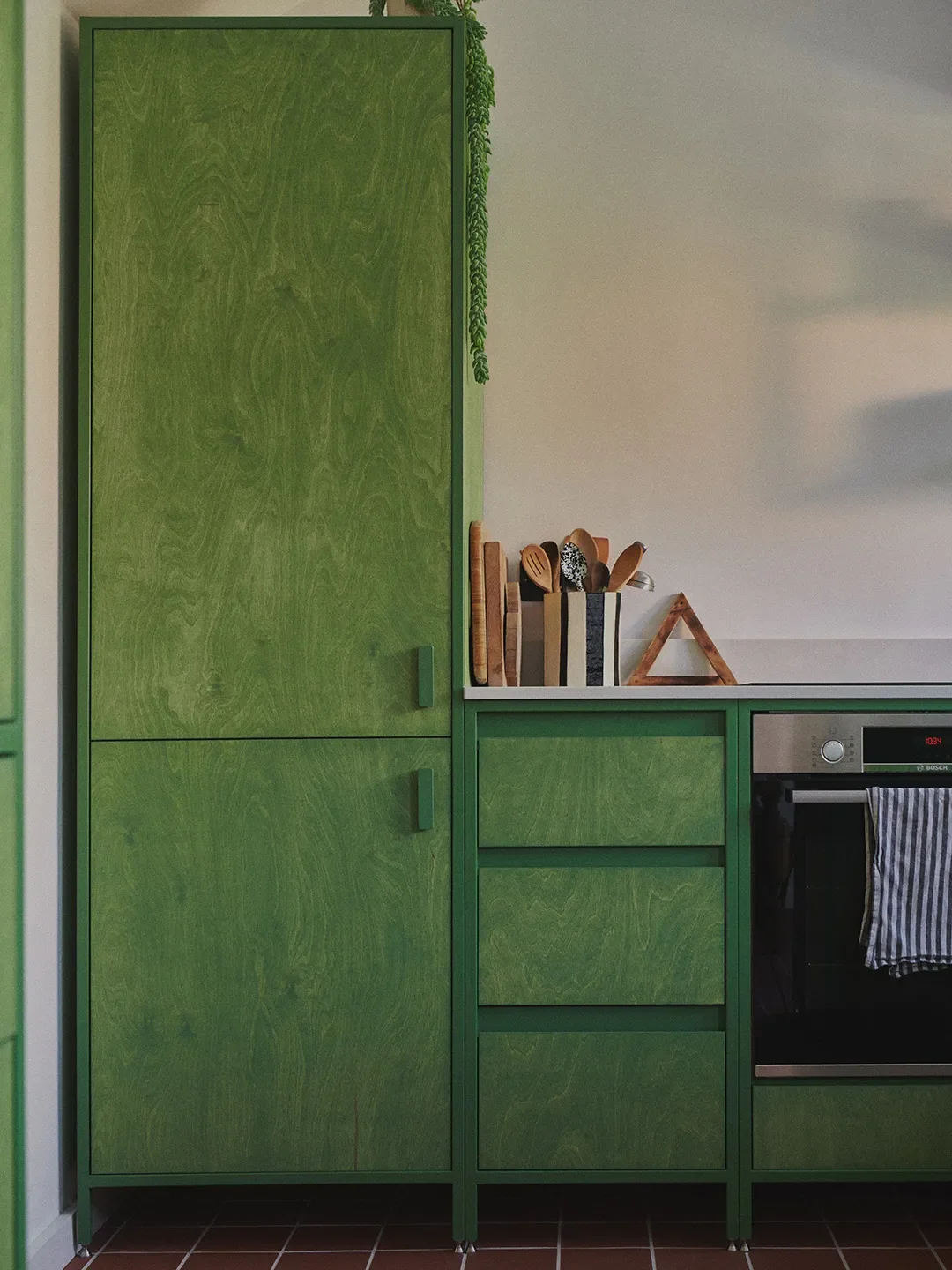
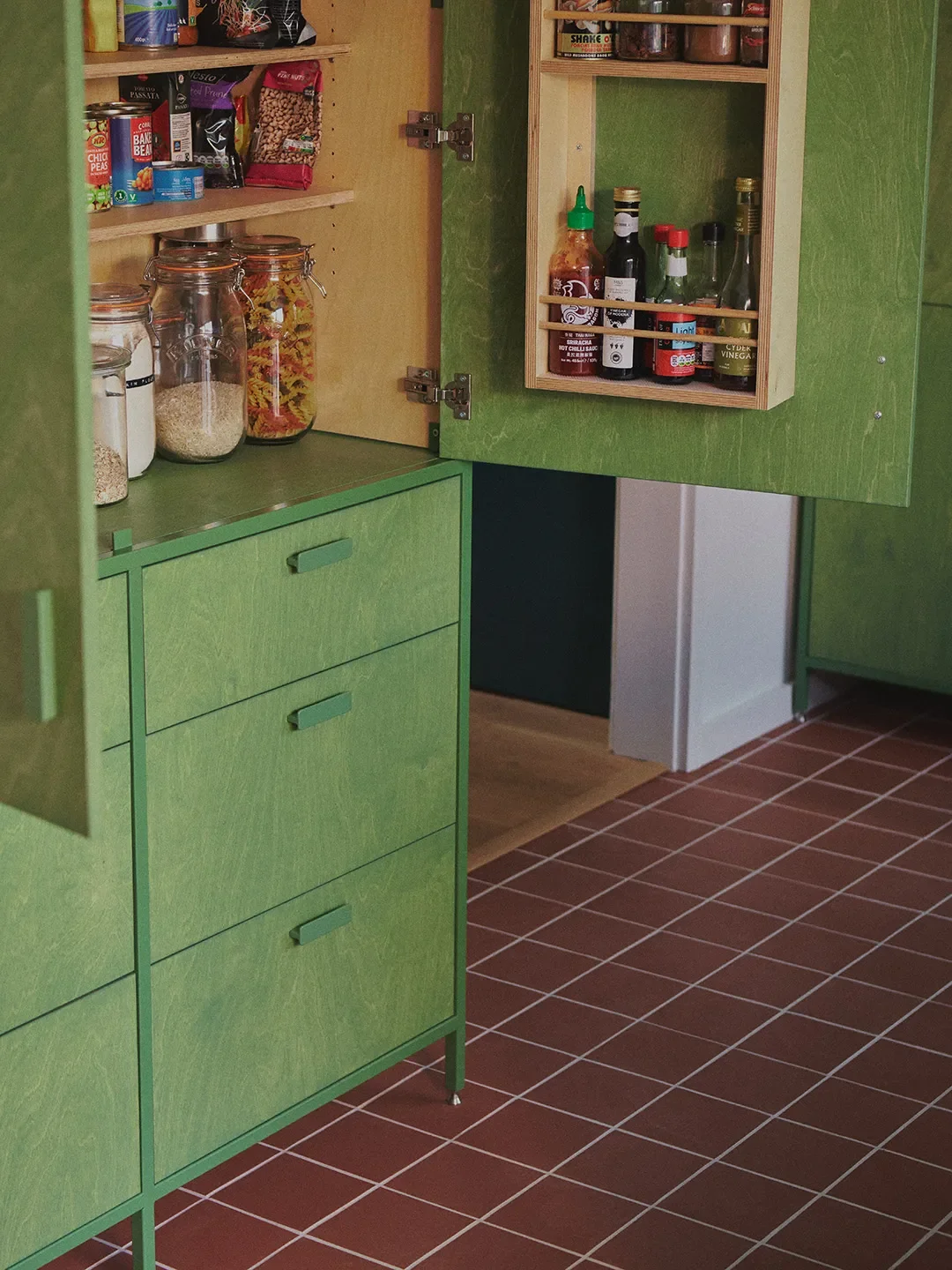
U.K.-based bespoke kitchen designer Jetsam Made selected RAL 6011 (also called Reseda Green) for this space’s cabinets and powder-coated steel frame. The birch plywood fronts are finished in OSMO oil wax for a natural, earthy appearance. The consideration: oil-based stains require extended drying time, and each coat must be wiped back after application. Think of it as building layers gradually over time.
Keep It Streamlined with Flat Slab Doors
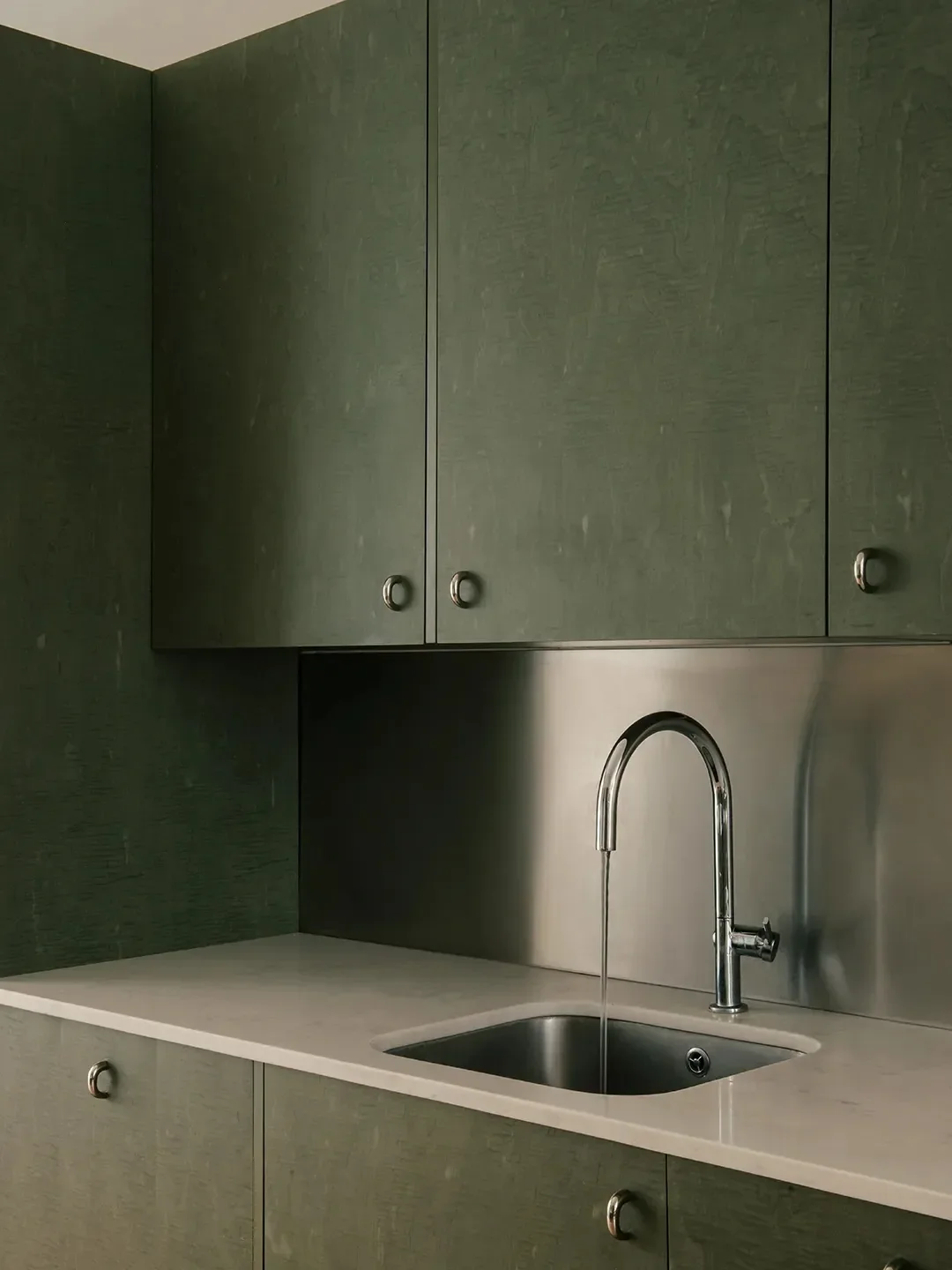
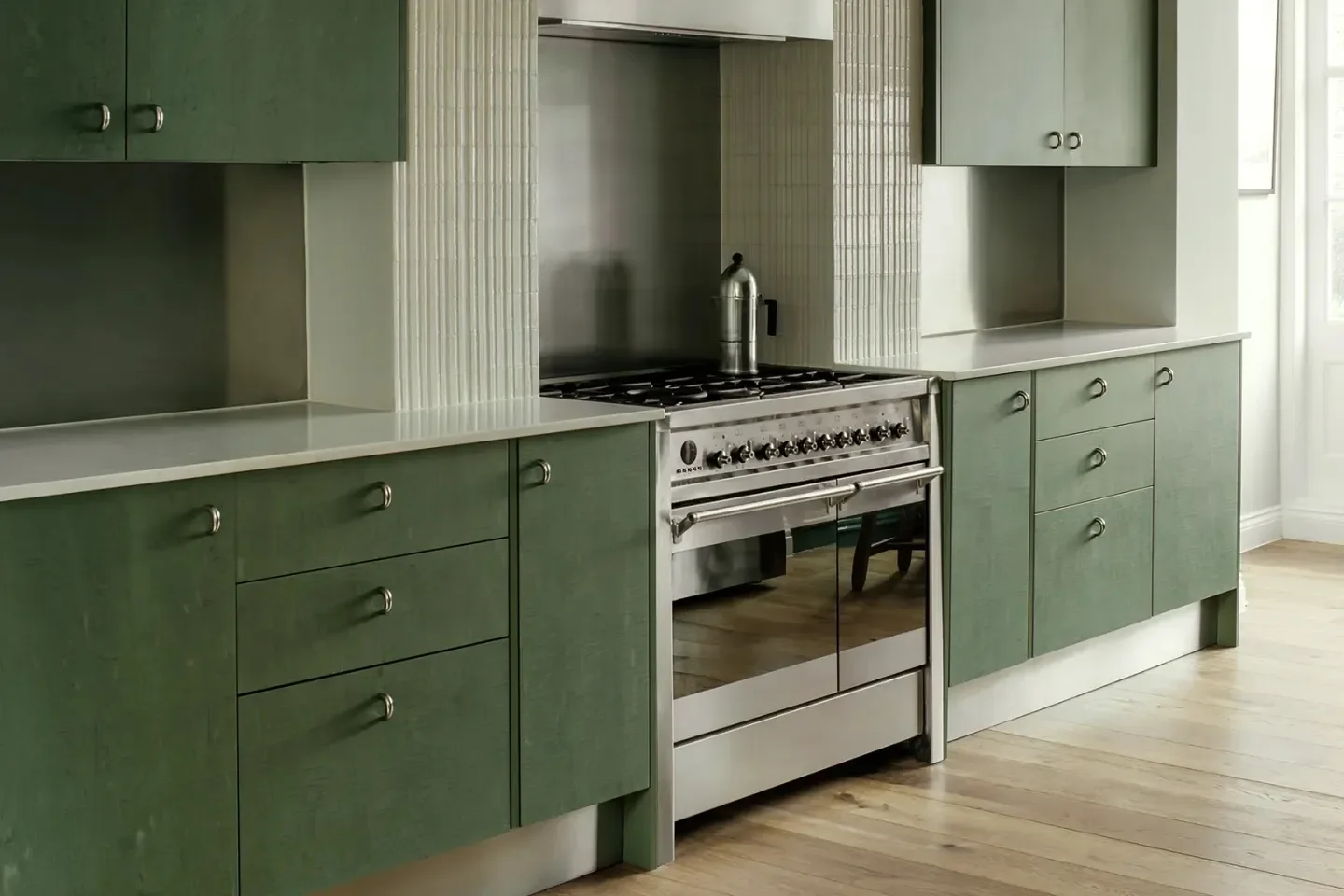
Knowing her client admired Emma Chamberlain’s green L.A. kitchen, designer Tabitha Organ adapted the look for his London renovation, finishing the tulipwood cabinets in a satiny green stain from Mundy Veneers. Her interpretation reads as subtly futuristic, thanks to the chunky polished-nickel handles from Spaces Within and the contemporary flat slab doors.
Pair Bold Stain with Simple Hardware
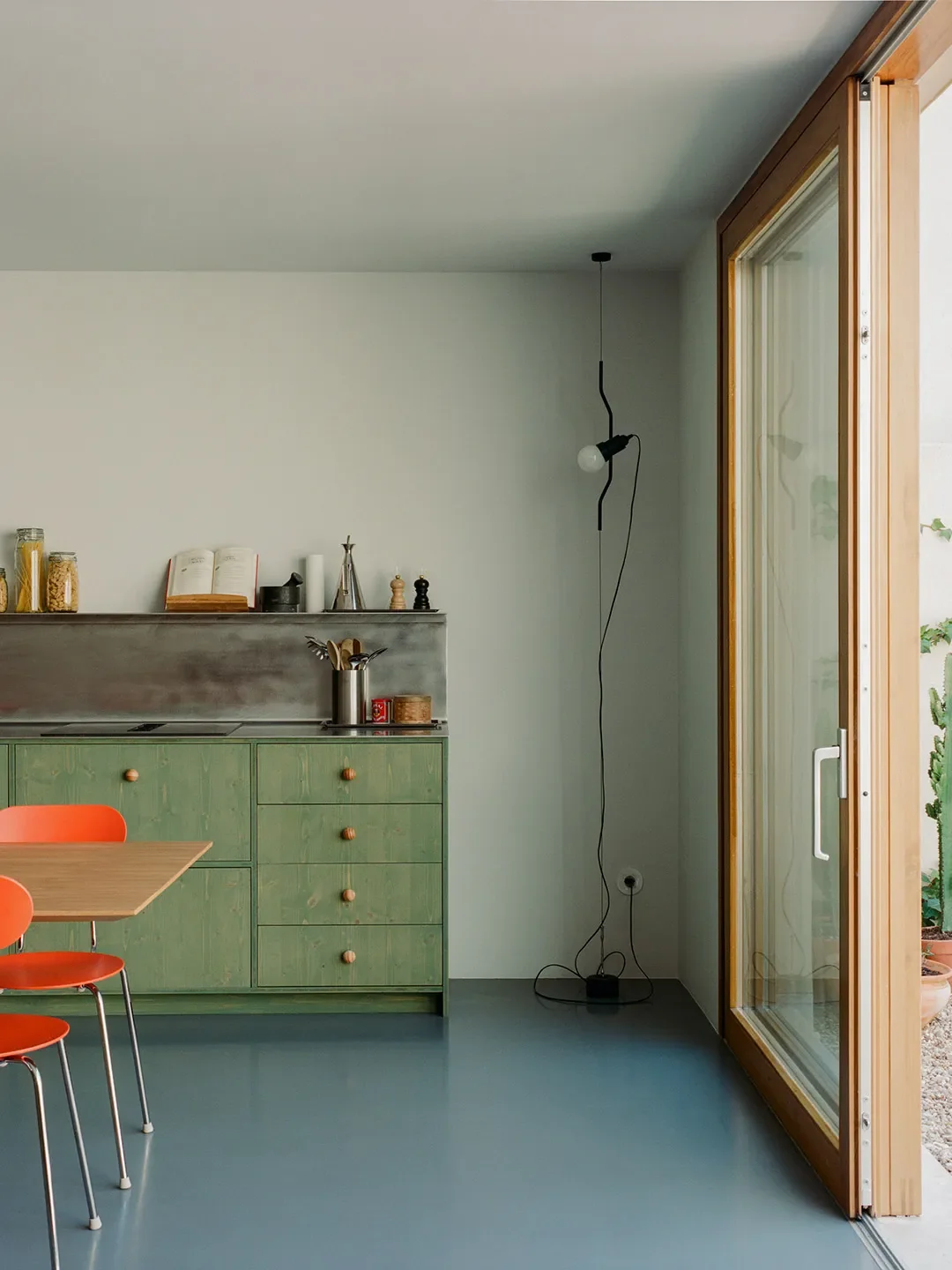
With a bold stain of this kind, it is advisable to keep other material selections simple, notes Bohn. “[It] allows the color to stand on its own and truly shine,” she says. Humble wood knobs, plug-in lighting, and a steel backsplash with patina all share the same “unfinished” quality as the semi-transparent cabinet stain in this Jose Andrade Rocha project.
Extend the Stain to Pantry and Wall Panels
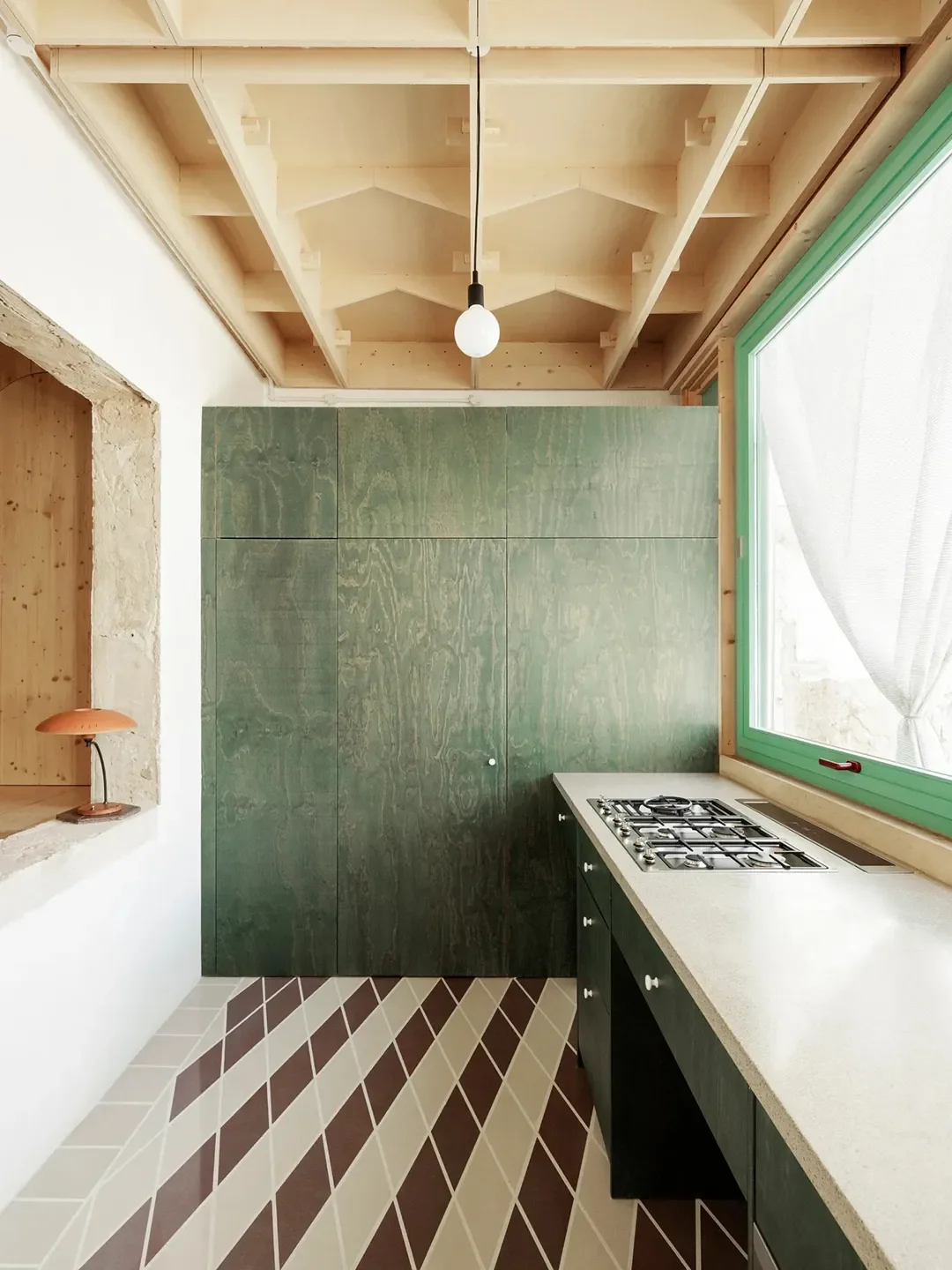
Plywood is a near-perfect surface for colorful stains—there is sufficient movement in the grain to remain visible even after several coats. In this Palma de Mallorca residence by SMS Arquitectos, poplar boards were used to craft not only cabinets but also doors and wall panels. It is one more reason to set aside the paint roller and pick up a lint-free rag.

Lydia Geisel
Home Editor
Lydia Geisel has been on the editorial team at Domino since 2017. Today, she writes and edits home and renovation stories, including house tours, before and afters, and DIYs, and leads our design news coverage. She lives in New York City.
Learn more about Domino.comEditorial Standards